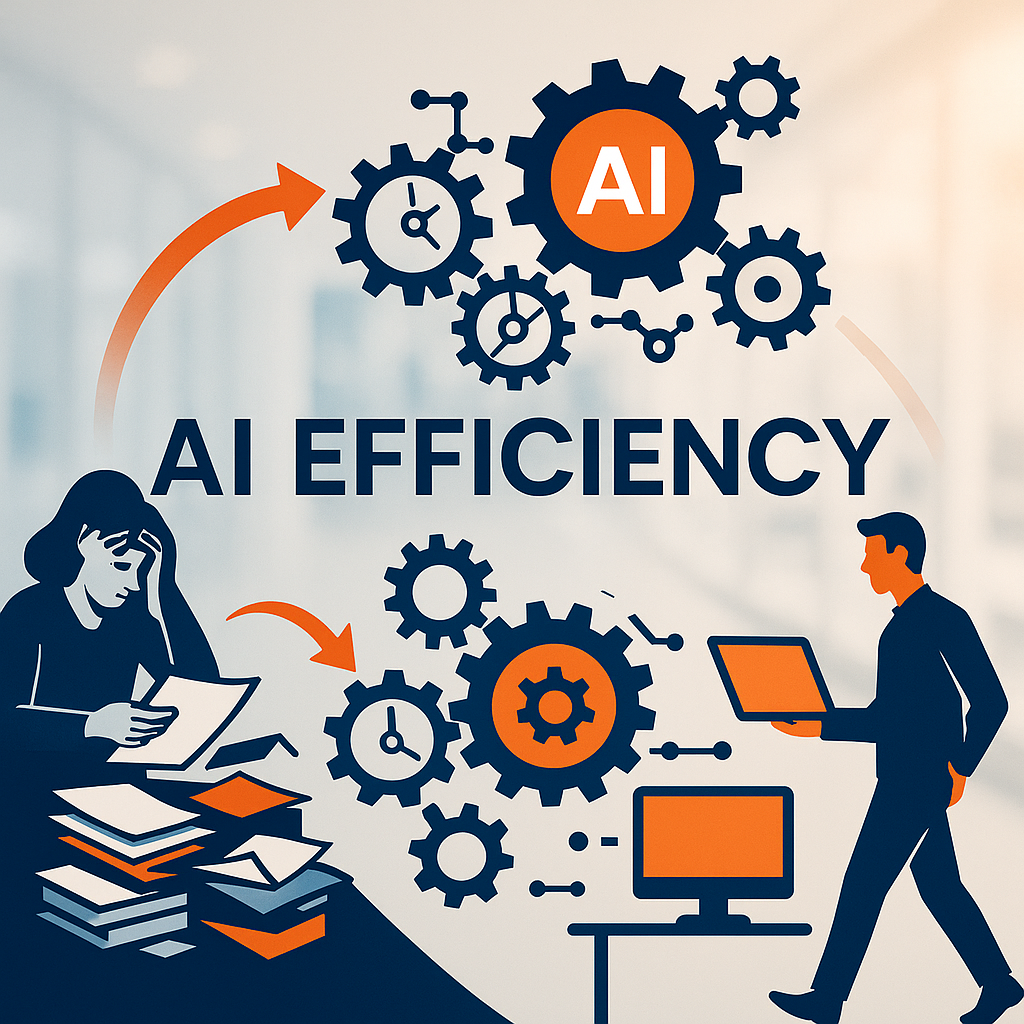
Your team is busy all day. Meetings, follow-ups, CRM updates, status checks. But revenue per head hasn’t moved in 2 years.
That gap between activity and output has a name. We call it Execution Drag: the invisible tax your business pays when every process depends on a person remembering to do it. In fact, most service businesses between $5M and $50M lose 10 to 15% of revenue to this drag every year. Not because people are lazy. Because the systems underneath them were never built to scale.
The AOS (AI Operating System) fixes that. It is a 3-layer framework that moves your operations from manual overload to AI-driven efficiency. Not by adding more tools. By building actual infrastructure.
- Manual operations hit a ceiling. Growth stalls when every process depends on a person.
- The AOS uses 3 layers (Foundation, Growth, Optimization) to replace coordination overhead with AI agents.
- Companies that build this infrastructure now compound their advantage with every automated process.
- The goal is not fewer people. The goal is each person producing 3 to 5x their current output.
Why Manual Operations Always Hit a Wall
In Scaling Up, Verne Harnish identifies the core reason companies stall between $5M and $50M. It is not a talent problem. It is not a market problem. It is a systems problem. When every process depends on a specific person doing a specific thing at the right time, you have a business that cannot grow past the capacity of its people.
Harnish calls these “growth ceilings.” They show up as:
- Slow, error-prone execution: Manual processes break under volume. A 5-person team can muscle through it. A 20-person team cannot.
- Leads falling through cracks: Marketing generates traffic, but follow-up depends on someone remembering to send the email. According to Harvard Business Review research, companies that respond to leads within an hour are 7x more likely to qualify them. Most service businesses respond in days.
- Burnout and turnover: Your best people spend 60% of their day on copy-paste coordination work (what we call Human Glue). They did not sign up for that. So they leave.
The answer is not hiring more people. As we explored in The Hidden Hiring Tax, every new hire adds coordination overhead that eats into the capacity they were supposed to create. The answer is building systems that run without someone holding them together.
How to Build a Foundation That AI Can Run On
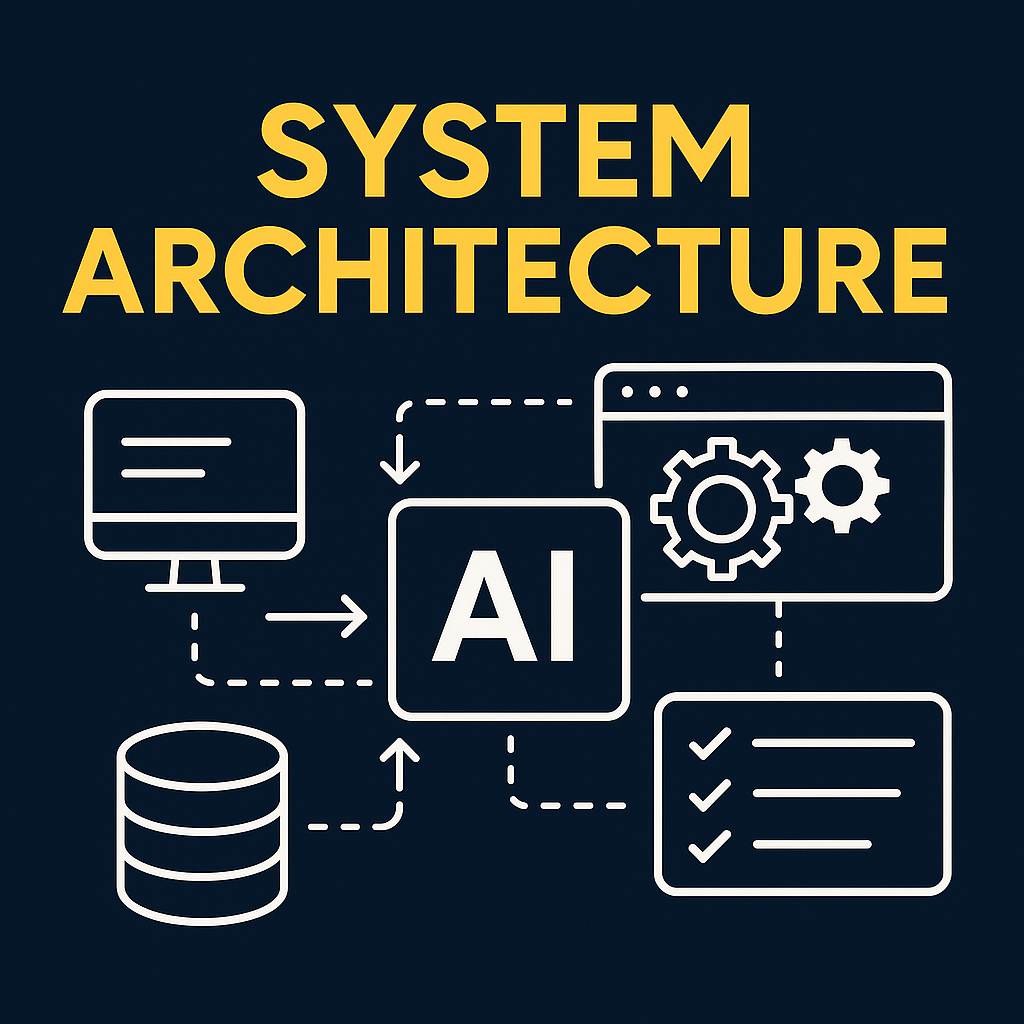
Before you deploy a single AI agent, you need infrastructure that can support it. This is the part most businesses skip. They buy the tool first and figure out the architecture later. Consequently, they end up with Zapier spaghetti: 40 automations, none of them talking to each other, half of them broken.
The Foundation Layer of the AOS solves this with 3 moves:
- Connect your CRM properly: Your CRM needs to sync data with AI agents in real time. Not through batch exports. Not through manual uploads. Bidirectional, live data flow. If your CRM cannot do this, it is the wrong CRM.
- Build a Business Cortex: This is your company’s brain. Everything your best employees know, locked in so it cannot walk out the door. Pricing rules, sales scripts, onboarding steps, escalation paths. All documented, all searchable, all available to AI agents when they need it.
- Map your workflows end-to-end: From the moment a lead clicks an ad to the moment a client pays an invoice. Every step. Every handoff. Every place where something gets dropped. You cannot automate what you have not mapped.
This is what Harnish prescribes for operational scaling in Scaling Up: get the processes out of people’s heads and into systems. The AOS is the AI-powered version of that same principle. Instead of documenting workflows in binders nobody reads, you encode them into infrastructure that AI agents can actually execute.
Where AI Agents Do the Real Work
With infrastructure in place, the Growth Layer deploys AI agents that do actual work. Not chatbots answering FAQs. Digital Labor (AI agents doing the valuable work nobody wants to do) that handles real operational tasks:
- Automate response and follow-up: A lead fills out a form at 11pm on a Saturday. An AI agent qualifies them, sends a personalized response, and books a Monday call. No human needed. Research from McKinsey estimates that 60 to 70% of current work activities could be automated with existing AI technology.
- Run CRM operations: Contact updates, pipeline moves, task creation, follow-up sequences. All the boring-but-valuable work that eats 10 to 15 hours per employee per week. AI agents handle it in the background while your team focuses on closing.
- Free your people for high-value work: When Digital Labor handles the coordination, your team gets to do what you actually hired them for. Strategy. Relationships. Creative problem-solving. We call this Human Liberation: your team focuses on strategy, empathy, and high-level closing.
This approach mirrors the principles behind achieving business growth with AI scalability: systematically replacing coordination overhead with intelligent automation.
How to Keep Getting Better After Launch
Deploying AI agents is not the finish line. It is the starting line. The Optimization Layer is where you turn a working system into a compounding advantage.
Here is what that looks like in practice:
- Review workflows monthly: Every 30 days, audit which processes are still manual. You will find new automation opportunities every single time. The business evolves. The system should evolve with it.
- Use real methodology, not guesswork: Techniques like Lean and Six Sigma are not just for manufacturing. Apply them to your AI workflows. Where is waste? Where do handoffs break? Fix those first.
- Build feedback loops: AI agents should report what is working and what is not. Set up dashboards. Track response times, conversion rates, and task completion rates. Then use that data to sharpen the system every month.
As a result, each optimization cycle makes the next one easier. The first month, you catch the obvious wins. By month 6, your system runs better than most businesses with 3x the headcount.
What Changes When You Build This
The businesses that install the AOS see 3 shifts within the first 6 months:
- Every lead gets followed up: Not most leads. Every lead. At 11pm, on weekends, on holidays. AI agents do not take days off. Your pipeline stops leaking.
- Sales focuses on selling: When CRM updates, scheduling, and data entry happen automatically, your sales team spends their time on conversations. Relationships. Closing. The work that actually generates revenue.
- You grow without proportional hiring: This is the big one. Instead of adding a person for every $500K in new revenue, your existing team absorbs the growth. One person with the right AI infrastructure operates with the output of 10.
Moreover, the businesses that build this infrastructure now will have a compounding advantage. Each automated process creates capacity for the next layer of growth. In other words, AI-driven efficiency is not a one-time project. It is an operating model. And the gap between companies that build it now and companies that wait will only widen.
Frequently Asked Questions
What is an AI Operating System and how is it different from regular automation?
An AI Operating System (AOS) is a structured, 3-layer framework that goes far beyond basic automation tools like Zapier or simple chatbots. Where regular automation connects point A to point B, the AOS builds a complete operational backbone: a foundation layer for system architecture, a growth layer where AI agents handle real work, and an optimization layer that continuously improves performance. Think of it as the difference between duct-taping tools together and building actual infrastructure.
How long does it take to move from manual operations to AI-driven efficiency?
Most service businesses running $5M to $50M can make the transition within 6 months. However, the timeline depends on your starting point. Some companies already have a CRM and basic workflows in place, so the foundation layer moves fast. Others are running everything through spreadsheets and group texts. Either way, the approach stays the same: foundation first, agents second, optimization third.
Can AI agents really replace hiring more people?
Not replace. Redirect. AI agents handle the boring-but-valuable work: CRM updates, lead follow-ups, data syncing, scheduling, reporting. The stuff that eats 10 to 15 hours per employee per week. Your people still do what humans do best. Strategy, relationships, creative problem-solving, closing deals. The result? You get the output of a much larger team without the payroll to match.
Your business is doing the work. The question is whether the work is doing enough. The AOS gives you a way to find out. Stop guessing where time disappears. Start measuring it.
Take a free Hiring Tax Diagnostic to see exactly where you are bleeding time and money. Then explore the AI Operating System built specifically for $5M to $50M service businesses.