Nassim Taleb has this concept called antifragility. Most people read it as “be resilient.” That’s not what he said. Resilience means you survive the shock. Antifragility means you get stronger from it. The shock is the input, not the obstacle.
I’ve been thinking about that a lot this week.
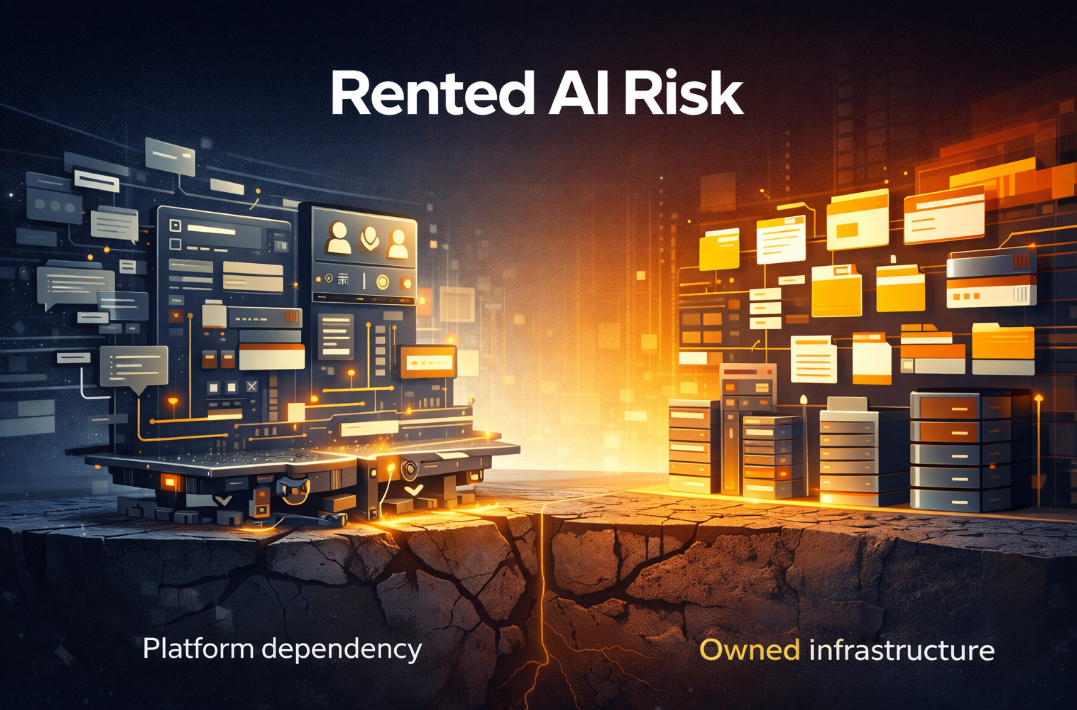
Because OpenAI just announced they’re sunsetting the Assistants API. Not deprecating a minor feature. Not tweaking a parameter. The entire orchestration layer that thousands of businesses built real infrastructure on top of. Gone.
And the businesses that treated a platform as a foundation are about to learn what that costs.
Key Takeaways
- OpenAI’s Assistants API deprecation forces businesses to rebuild entire AI workflows, not just swap a model
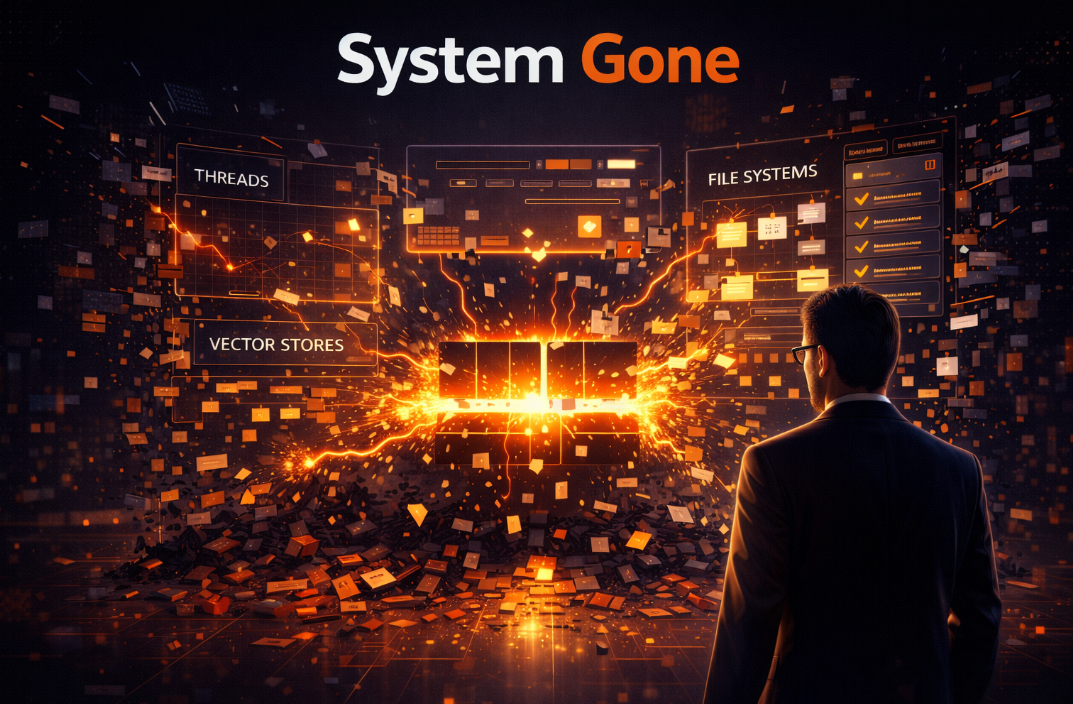
- The Assistants API was a full orchestration layer (threads, vector stores, retrieval, file management). When it goes, everything on top of it breaks.
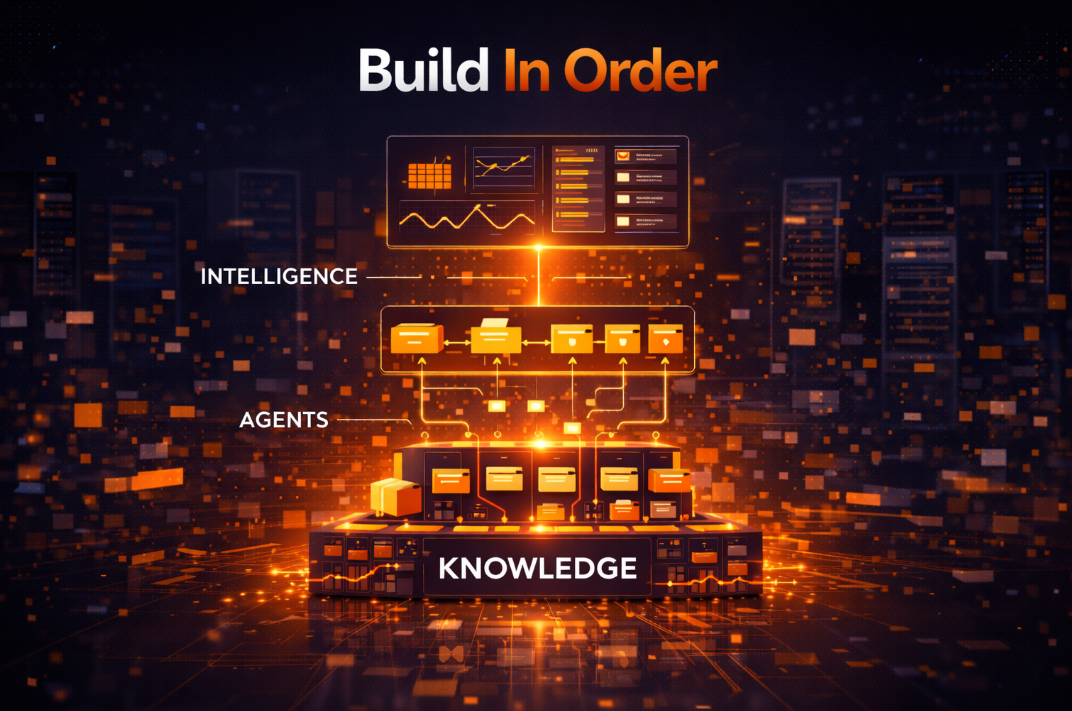
- The businesses that survive platform shifts build in a specific order: knowledge first, agents second, intelligence third
- This is the same pattern that hit SEO, Facebook organic reach, and iOS 14 ad attribution. The script hasn’t changed.
I’ve Watched This Movie 5 Times
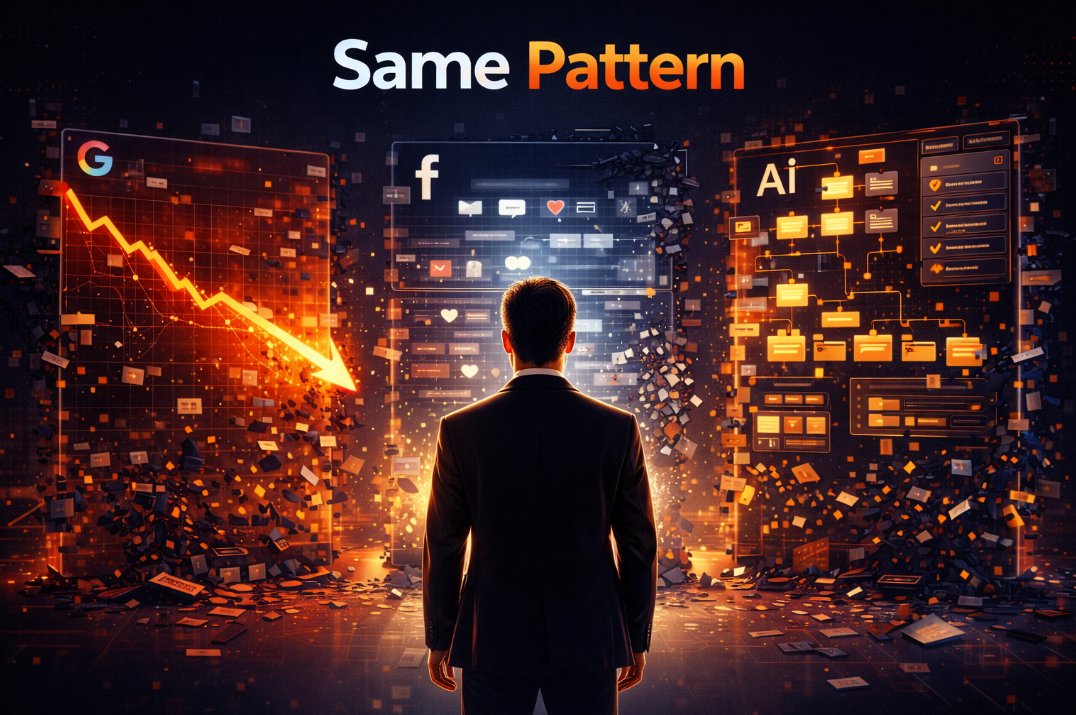
I’m not guessing about what happens next. I’ve lived through this exact script since 2011.
Google Panda hit and businesses that built their entire growth strategy around a single ranking signal lost 40% of their traffic overnight. I watched it happen to clients. The ones who survived had built email lists and direct relationships outside of Google’s walls. The ones who didn’t? Started over from zero.
Then Facebook killed organic reach. I’d spent years helping brands build audiences on that platform. Real audiences. Engaged followers. And one morning, those audiences cost money to reach. Just like that. The followers were never really ours. (That was an expensive lesson, and I learned it with client budgets on the line.)
Then iOS 14. This one hit me personally. I’d built an attribution system over 4 years that tracked every dollar from click to close. When Apple dropped iOS 14.5 and wiped out cross-app tracking, that system broke overnight. Not because it was poorly built. Because the platform underneath it changed the rules without asking.
You know what saved me? The attribution data lived in infrastructure I owned. First-party tracking. Server-side events. CRM-connected pipelines. I rebuilt the tracking layer in weeks, not months, because the knowledge and the data were mine. The platform was just the pipe.
Taleb would call that antifragile. The system didn’t just survive the iOS 14 shock. It came out better, because the rebuild forced me to eliminate every remaining dependency on third-party tracking I didn’t control.
Now AI is playing out the same script. And the cost of starting over is about to get very real.
What OpenAI Actually Killed (It Wasn’t Just a Model)
Here’s where most people get the story wrong. They hear “OpenAI sunset the Assistants API” and think: fine, we’ll swap to a different model.
You can’t. Because the Assistants API was never just a model.
It was an entire orchestration layer. Businesses built real infrastructure on top of it:
- Threads: Stateful conversation management that persisted across sessions
- Runs: Execution handling for complex, multi-step agent workflows
- Built-in tools: Code interpreter, file search, function calling
- Vector stores: Knowledge retrieval and RAG pipelines for custom data
- File management: Document processing, storage, and retrieval
Companies used this to build custom AI agents, internal knowledge bases, automated customer service workflows, and operational processes. Real infrastructure that real teams depended on every day.
Then OpenAI went a different direction. No clean migration path. No backward compatibility. Just a deprecation notice and a countdown.
Here’s the part that catches people off guard. The model still works. GPT-4 isn’t going anywhere. You can still call it through the Chat Completions API.
But every thread you built. Every vector store. Every retrieval pipeline. That breaks. You’re not swapping a model. You’re rebuilding a system. And that rebuild isn’t a weekend project. It’s a quarter.
The Biggest Companies Already Know This Math

Salesforce. Palantir. Deloitte. McKinsey. They’re all building what they call “AI Operating Systems” now.
Not because the term sounds impressive in a board deck. Because they’ve been through enough platform shifts to know the math. Building your own foundation always costs less than rebuilding after someone else pulls theirs out from under you. Always.
Jim Collins studied this pattern for “Built to Last.” The companies that endured across decades weren’t the ones with the best technology at any given moment. They were the ones that built core systems they controlled, then adapted the tools around them as technology shifted. Same principle. Different century.
Research keeps showing that 95% of AI projects fail to show measurable ROI. And most of the time it’s not because the AI didn’t work. It’s because the foundation wasn’t built to last. Tools worked fine until the platform changed, the data got lost, or the orchestration layer vanished.
But here’s what should matter to you.
Enterprise companies are building this for Fortune 500. 18-month timelines. 7-figure budgets. Teams of 30 engineers.
If you’re running a $5M to $50M service business, you don’t have 18 months. You don’t have 30 engineers. You need the same principle built at your scale. Starting this quarter, not next year.
The Order You Build Determines Everything
Most businesses start their AI journey with the shiny tool. A chatbot. An API integration. Some workflow automation that promises to save 10 hours a week.
That’s building the house from the roof down.
I learned this lesson the hard way across 14+ years of platform shifts. Back in 2013, I started diversifying across every major ad platform, not because I wanted to be everywhere, but because I’d already seen what happens when you depend on one. (The Platform Expansion Strategy, I call it now. At the time I just called it survival.) The insight was this: platform diversity isn’t about being everywhere. It’s about understanding that any single platform can change the rules on you tomorrow.
So when I built the AI infrastructure for my own business, I built it the same way I’d built my attribution stack after iOS 14 gutted the old one. Knowledge first. Agents second. Intelligence third.
The 3-Step Sequence That Survives Platform Shifts
First: lock in your institutional knowledge. Your SOPs. Your decision frameworks. Your brand context. Your customer intelligence. All stored on infrastructure you own. Not inside a platform’s temporary memory. Not in conversation threads that get compressed and forgotten. Structured, searchable files that belong to you.
This is the foundation. Without it, every AI tool you deploy is guessing. With it, every tool gets smarter because it’s working from real context. Big difference.
Second: deploy AI agents on top of that owned foundation. Now your agents have context. They produce consistent output because they’re drawing from your knowledge, not generic training data. And when a platform changes direction (not if, when) you swap the tool. Knowledge stays. Agents reconnect. The rebuild takes days, not months.
That’s antifragility in practice. The shock doesn’t break you. It forces an upgrade.
Third: build the intelligence layer. Not 47 Slack notifications nobody reads. Not a dashboard that gets checked once a quarter. A synthesized brief that tells leadership what actually matters this week. What needs attention. What’s working and what isn’t.
That sequence isn’t a tech stack. It’s an operating system you own. Every platform upgrade makes your system faster. Not obsolete.
Same Disruption. Completely Different Outcome.
The businesses that built their entire AI workflow on OpenAI’s Assistants API without owning their knowledge layer? They’re starting over this week. Rebuilding from scratch. Rearchitecting everything on a timeline they never planned for and a budget they never allocated.
The ones that built on foundations they own? They’ll swap the API call and keep moving. Knowledge intact. Processes documented. Institutional memory didn’t evaporate because a platform published a deprecation notice.
Same disruption. Same day.
Completely different outcome.
The difference was never the AI model. It was the order they built it in. Just like it was never the ad platform in 2012, or the tracking pixel in 2021. The businesses that survived every one of those shifts owned their data, owned their process, and treated every platform as replaceable infrastructure.
You don’t survive 15+ years self-employed through every major platform shift since 2011 unless you build that way. I didn’t learn it from a framework. I learned it from rebuilding.
Frequently Asked Questions
Can’t I just swap to a different AI model if OpenAI changes something?
You can swap the model. GPT-4 still works through the Chat Completions API. But the Assistants API wasn’t just a model. It was an entire orchestration layer: threads, vector stores, retrieval pipelines, file management, execution handling. When that layer gets deprecated, you’re rebuilding every workflow, every agent, and every integration that sat on top of it. The model was never the risk. The infrastructure wrapped around it was.
What does “building AI on rented land” mean?
Your AI knowledge, workflows, and business logic live inside a platform you don’t control. When that platform changes direction, deprecates a feature, or sunsets an API, everything you built on top of it breaks. “Owned land” means storing your institutional knowledge, SOPs, and decision frameworks in structured files on your own infrastructure. Platforms become interchangeable. Your foundation stays constant no matter which tool you’re running.
How do I protect my business AI from platform changes?
Build in the right order. First, lock your institutional knowledge into structured files you own. SOPs, decision frameworks, brand context, customer intelligence. Second, deploy AI agents on top of that owned foundation so they draw from your data, not platform memory. Third, build an intelligence layer that synthesizes what matters for leadership. When a platform changes (and it will), you swap the tool. Knowledge stays. Rebuild takes days, not months.
Ready to see where AI can eliminate your biggest operational bottleneck? Take a free Hiring Tax Diagnostic and we’ll map exactly where you’re bleeding time and money. https://calculator.maramamarketing.com